

Workshop 8 recap

Building Resilience through Trust

BELONG → PERFORMFriday 16 October 202690 minutes

Presented by

  • Joanna PasekJoanna PasekSenior HR Business Partner · Poland, Baltics & Ukraine
01

The 30-second version

Apollo 13 came home because two teams trusted each other. Joanna showed that resilience is more than being strong. It means we pause, adapt, stay connected and learn together. And resilience runs on trust. A silent drawing game, a look at trust killers and their cost to the business, and a commitment tree closed our two-day journey.

The main messageResilience runs on trust. When people trust each other, they speak up, ask for help and change the plan together.

Trust killers the tables chose

Favouring some people
Low morale, higher turnover, missed goals
Taking credit for others’ success
Talent hides, knowledge is not shared
Only noticing bad results
Fear, people stop sharing
Looking for someone to blame
Toxic culture, people leave
Praising people who always agree
No honest view, good ideas lost
Emails to protect yourself
Problems are passed on, not solved
03

Six things to remember

  1. Resilience means adapting when things go wrong and finding a way forward together.
  2. It has four parts: stay grounded, adapt, stay connected, recover and learn.
  3. “I can handle everything” is endurance. Resilience changes something, so the next shift is easier.
  4. With trust, people share information, say “I don’t know” and ask for help. Without trust, pressure creates silence and blame.
  5. Trust grows from proof: kept promises, shared values, clear rules and fair treatment.
  6. Trust killers like gossip and favouritism hurt the business, not only the atmosphere.
04

What happened in the session

8 short parts, in order. Swipe to see them all, and tap one to go there:

  1. 1. Apollo 13: two teams, one solution
  2. 2. Resilience in four parts
  3. 3. Endurance is not resilience
  4. 4. Resilience runs on trust
  5. 5. Two hands, one pen
  6. 6. What makes us trust someone
  7. 7. Trust killers and their cost
  8. 8. Closing the journey
1

Part 1 of 8

Apollo 13: two teams, one solution

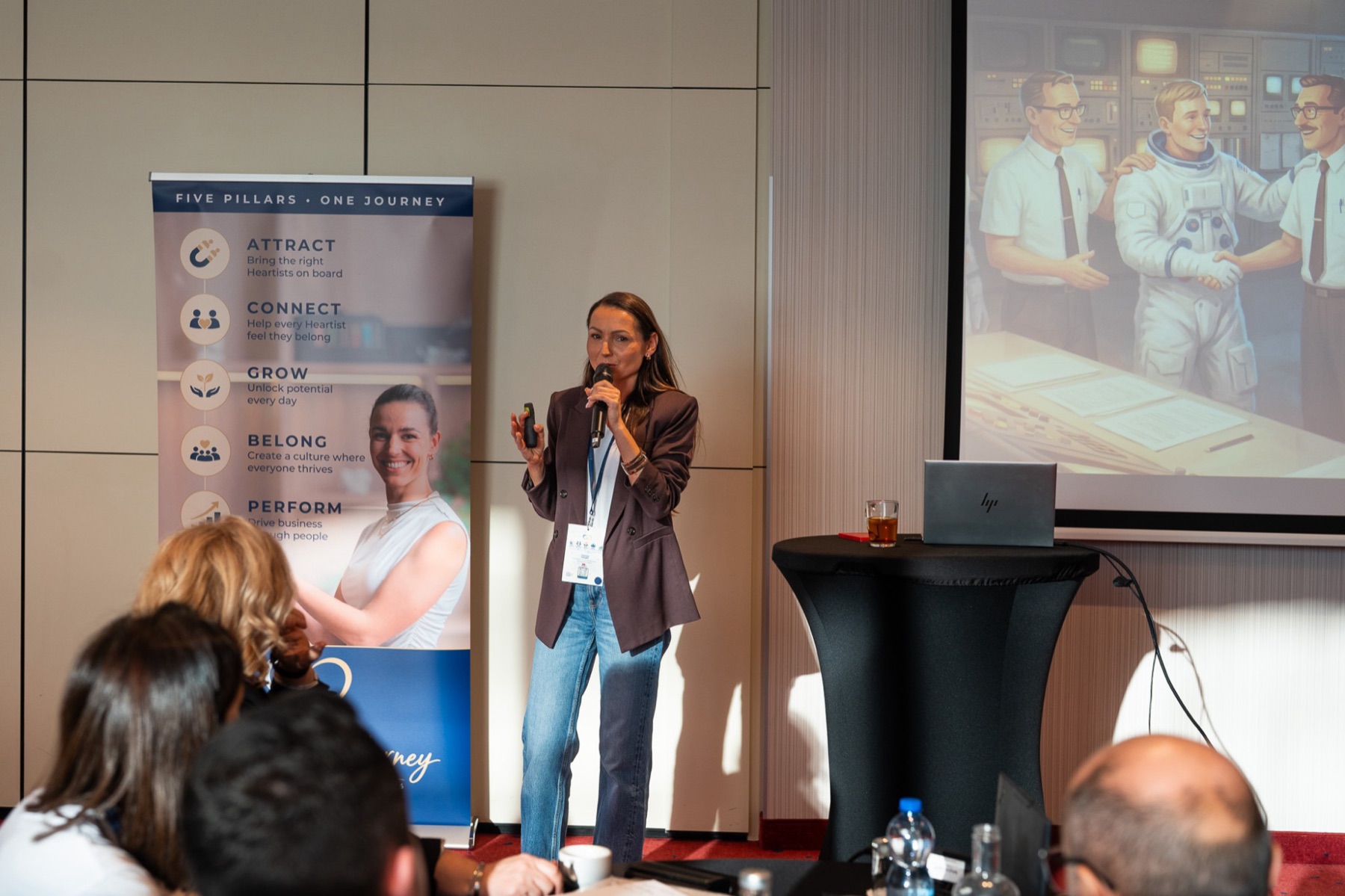
We started with a short film. The Apollo 13 crew needed a new air filter. Engineers on Earth built one from cardboard, bags and tape, and explained it by radio. Neither team could solve it alone.

The room said trust, communication and support brought them home.

The film we watched: “The Trust That Brought Them Home” (1 min 42 s, with subtitles).
2

Part 2 of 8

Resilience in four parts

Stay grounded: pause and ask what comes first. Adapt: change the plan when someone misses a shift. Stay connected: share what you know, and what you don’t know. Recover and learn: say “thank you, we survived”, then prepare for next time.

3

Part 3 of 8

Endurance is not resilience

Many hotels have a manager who says “I can handle it” and never stops. That is endurance. Resilience means we change something, so the next shift is easier for everyone.

4

Part 4 of 8

Resilience runs on trust

This was the one slide to take home. When the plan changes and people trust each other, they stop, raise concerns and share the tasks again. Without trust, pressure creates silence, blame and self-protection.

5

Part 5 of 8

Two hands, one pen

In pairs, two people held one pen for 90 seconds, with no talking. Each had secret instructions: one drew a house, the other a cat.

It is like a meeting where everyone says “we are aligned” but has a different goal.

6

Part 6 of 8

What makes us trust someone

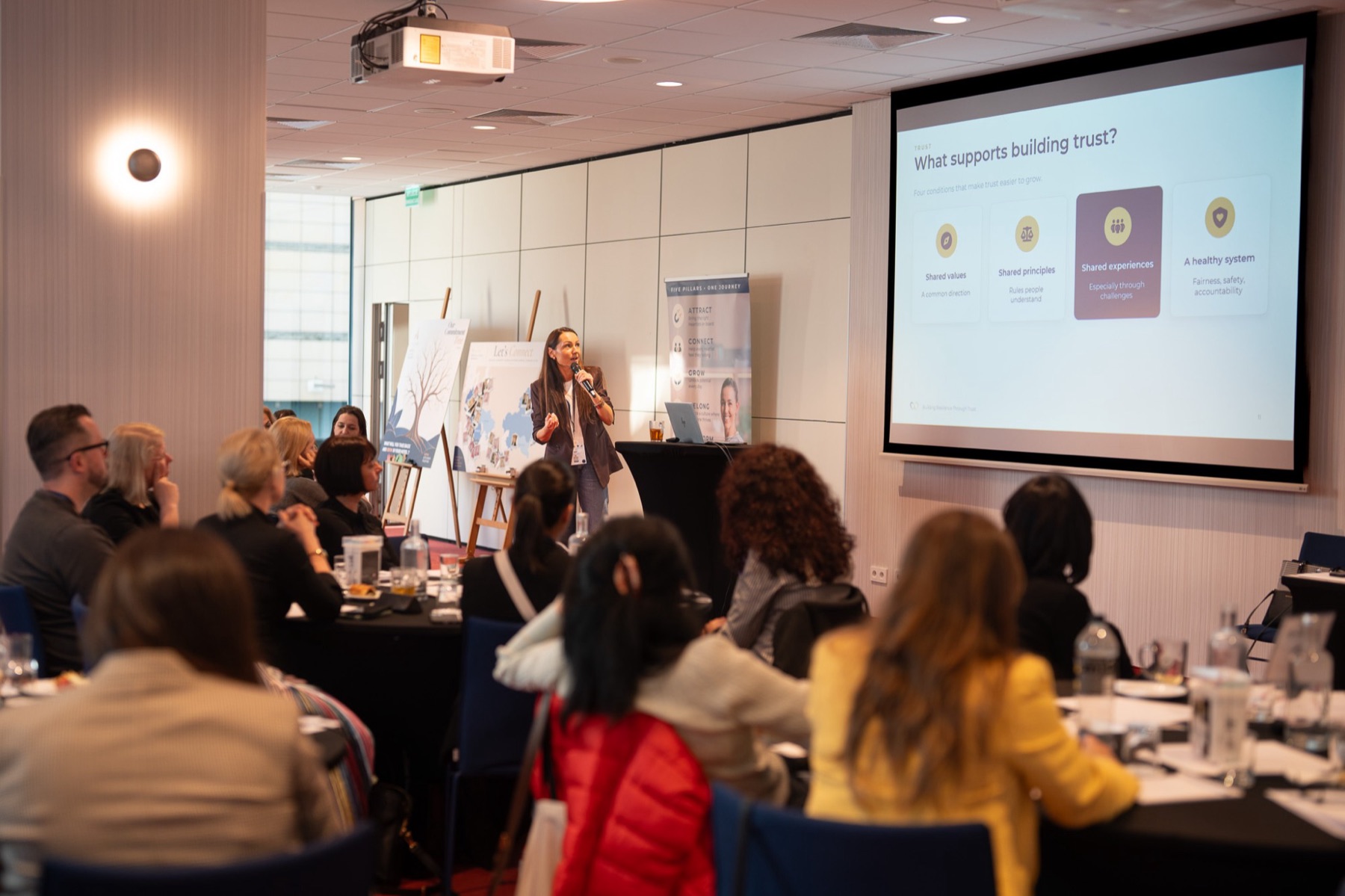
The room said: proof. Kept promises, small tests before big ones and shared values. Clear rules and fair treatment help too, and fairness is the job of P&C. In a safe team, people can say “I need help” or “I made a mistake”.

7

Part 7 of 8

Trust killers and their cost

Each table linked trust killers to the business. Favouritism lowers morale and raises turnover. When others take credit, people stop sharing knowledge. Praising people who always agree means good ideas are lost.

8

Part 8 of 8

Closing the journey

We looked back at our hopes: networking, fun, energy, touching hearts. We sang happy birthday and wrote our commitments on leaves for the commitment tree. One idea: keep the tree and check our progress next year.

05

The whole workshop on one page

BuildingResiliencethrough Trust1Apollo 13Plan B from tape and cardboardCrew trusts engineersEngineers trust crewNobody solves it alone2Four partsStay groundedAdaptStay connectedRecover and learn3Endurance vsresilience“I can handle it”Never stopsChange somethingEasier next shift4Trust buildersKept promisesShared valuesClear rulesFair treatment5Trust killersGossipFavouritismBlameTaking credit6Take it homeTrust-killers exerciseSafety questionnaireCommitment treeStart on Monday

Building Resilience through Trust

  1. 1Apollo 13

    • Plan B from tape and cardboard
    • Crew trusts engineers
    • Engineers trust crew
    • Nobody solves it alone
  2. 2Four parts

    • Stay grounded
    • Adapt
    • Stay connected
    • Recover and learn
  3. 3Endurance vs resilience

    • “I can handle it”
    • Never stops
    • Change something
    • Easier next shift
  4. 4Trust builders

    • Kept promises
    • Shared values
    • Clear rules
    • Fair treatment
  5. 5Trust killers

    • Gossip
    • Favouritism
    • Blame
    • Taking credit
  6. 6Take it home

    • Trust-killers exercise
    • Safety questionnaire
    • Commitment tree
    • Start on Monday
06

Tools you can use

Four parts of resilience

Stay grounded, adapt, stay connected, recover and learn.

Two hands, one pen

Pairs hold one pen, 90 seconds, no talking, secret and different instructions. Then talk about what happened.

Trust-killers handout

Choose three trust killers. What is the impact on the atmosphere? On the business? What is one trust-building response within your influence?

Psychological safety questionnaire

Learning, equal treatment, collaboration, challenging the status quo. Anonymous and voluntary. Do not call it a test.

Commitment tree

Each person writes one thing to start on Monday on a leaf, and puts it on the tree.

07

Best quotes

“Resilience runs on trust.”
Joanna Pasek
“When there’s trust, we can openly discuss it before we run forward to the solution.”
Joanna Pasek
“Change is the only constant thing in our hotels.”
Joanna Pasek
“I saw that he has trust in me… and from this point, I gave back much trust to him.”
A participant, after the one-pen drawing
“As long as we can do it for all our people, 160 of them, I will go for it.”
A participant, on fair incentives
“Whether I am in the right place with the right people in the right direction. Yes, I am.”
A participant, on their hopes for the event
08

Questions & answers

QWhat brought the Apollo 13 astronauts home?

ATrust, communication, supporting each other, belief, relying on each other’s skills, and two teams working as one.

QHow do we recover and learn after a hard situation?

AFirst thank the team: we survived. Then review what was good and what added pressure. Agree what to do next time, so it is easier.

QHow can we make sure we are really aligned?

AAgree on common goals, communicate, have patience and give each other space.

QWhat makes you trust someone at work?

AProof in actions, like kept promises. Small tests before bigger ones. And shared core values, which the D3 workshop helps to find.

09

Try this at your hotel

  • When the plan changes, pause first. What is the priority? Who knows what? Who can help?
  • After a hard shift, thank the team. Then agree one change for next time.
  • Say “I don’t know” and “I need help” yourself, so your team can say it too.
  • Run the trust-killers exercise with your team, and talk about the business impact.
  • Use the psychological safety questionnaire: anonymous, voluntary, not a test.
  • Make incentives and rules fair for every department.
  • Start the commitment you wrote on your leaf on Monday.

We wrote this recap from the session recording. Quotes are slightly edited to make them easier to read.

↑