

Workshop 6 recap

Engagement World Café

BELONGFriday 16 October 202690 minutes

Presented by

  • Rafał WitczakRafał WitczakAcademy Trainer · Learning & Development
01

The 30-second version

Engagement is built on strengths, not just on fixing gaps. Working in small groups and changing tables between rounds, participants shared moments when engagement felt easy, helped each other with real cases, and turned their best practices into reusable Engagement Playbooks. The top drivers from the room: passion, appreciation, freedom to act, managers’ trust and teamwork.

The main messageEngagement does not come from one-off projects. It comes from daily leadership behaviour. Find what already works in your teams, write it down, and help others copy it.

The five engagement drivers from the room

Driver 1
Passion for what we do
Driver 2
Appreciation of work done
Driver 3
Freedom to act
Driver 4
Managers’ trust
Driver 5
Teamwork
03

Six things to remember

  1. Engagement is built on strengths, not just on fixing gaps.
  2. Engagement comes from daily leadership behaviour, not from formal projects alone.
  3. The five drivers from the room: passion, appreciation, freedom to act, managers’ trust and teamwork.
  4. People learn fastest from successful peers, so make good habits visible and easy to copy.
  5. A good playbook has seven parts: name, context, steps, roles, tools, success measures and pitfalls.
  6. Commit to one practice, one measure and one partner for the next 14 days.
04

What happened in the session

8 short parts, in order. Swipe to see them all, and tap one to go there:

  1. 1. Strengths, not gaps
  2. 2. The science behind it
  3. 3. Round 1: When did engagement feel easy?
  4. 4. Round 2: The case clinic
  5. 5. The Playbook Lab
  6. 6. Harvest: the gallery walk
  7. 7. The 14-day commitment
  8. 8. What the room showed
1

Part 1 of 8

Strengths, not gaps

Rafał started with one idea: engagement is built on strengths, not just on fixing gaps. Classic engagement work starts with surveys and what is broken, and people become defensive.

This workshop did the opposite: find what already works, turn it into a plan, and share it with peers.

2

Part 2 of 8

The science behind it

Four ideas guided the session. Start from positive stories (appreciative inquiry). People learn fastest from successful peers (social learning). Good practices grow when a group writes down how it works (communities of practice). And people share more when they get something back (social exchange).

3

Part 3 of 8

Round 1: When did engagement feel easy?

Each person remembered a moment in the last 6 to 12 months when engagement felt easy and worked well. Tables of four or five shared their stories, and a host wrote down the behaviours, rituals and tools.

Each table then finished the sentence “If we did more of …, engagement would naturally improve.” The same answers came from every table: passion for what we do, appreciation of work done, freedom to act, managers’ trust, and teamwork.

4

Part 4 of 8

Round 2: The case clinic

Participants changed tables. One person shared a real goal and a real struggle. The group first asked questions only to understand, with one strict rule: no advice yet. Then everyone brainstormed concrete actions.

5

Part 5 of 8

The Playbook Lab

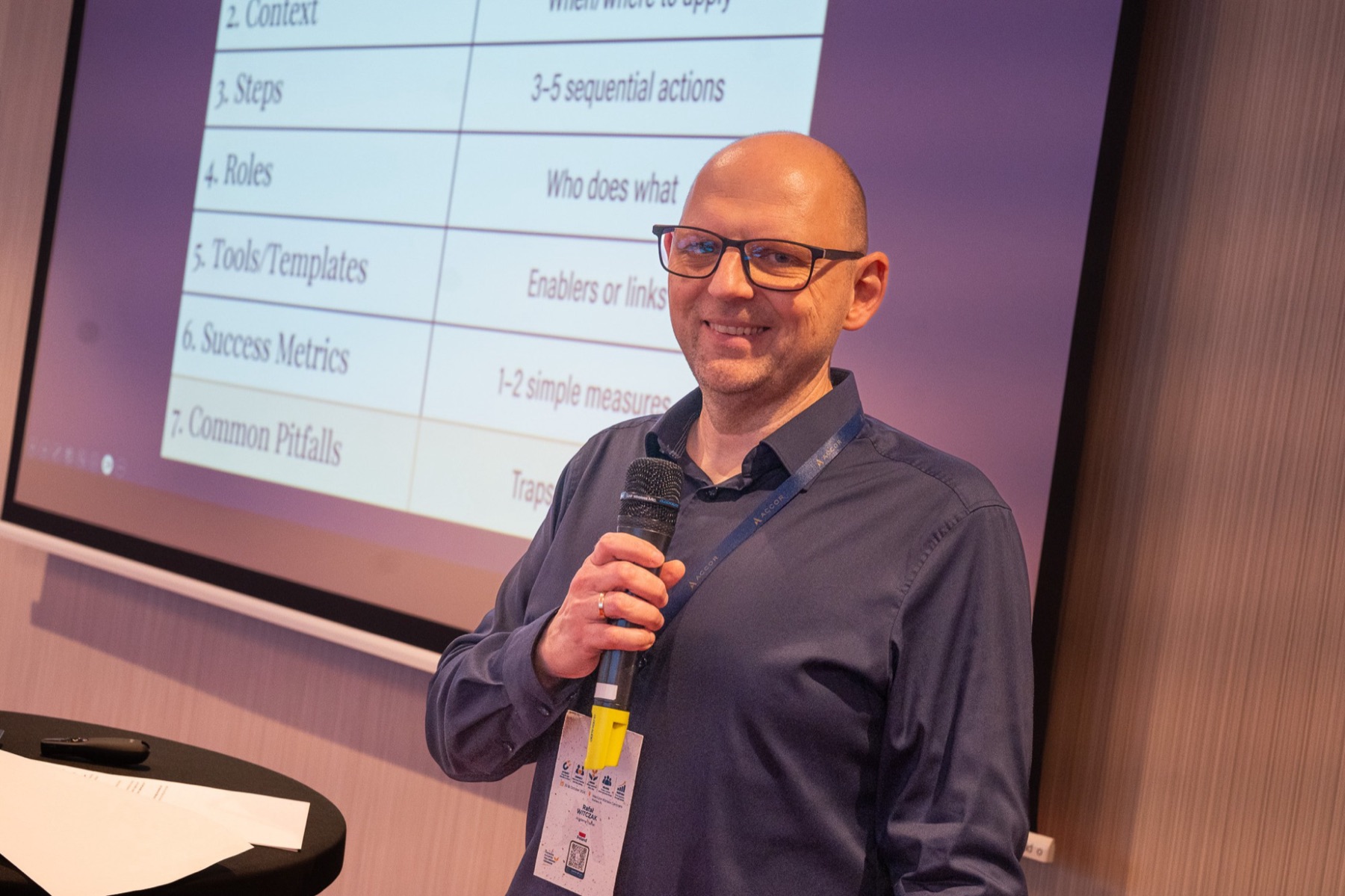
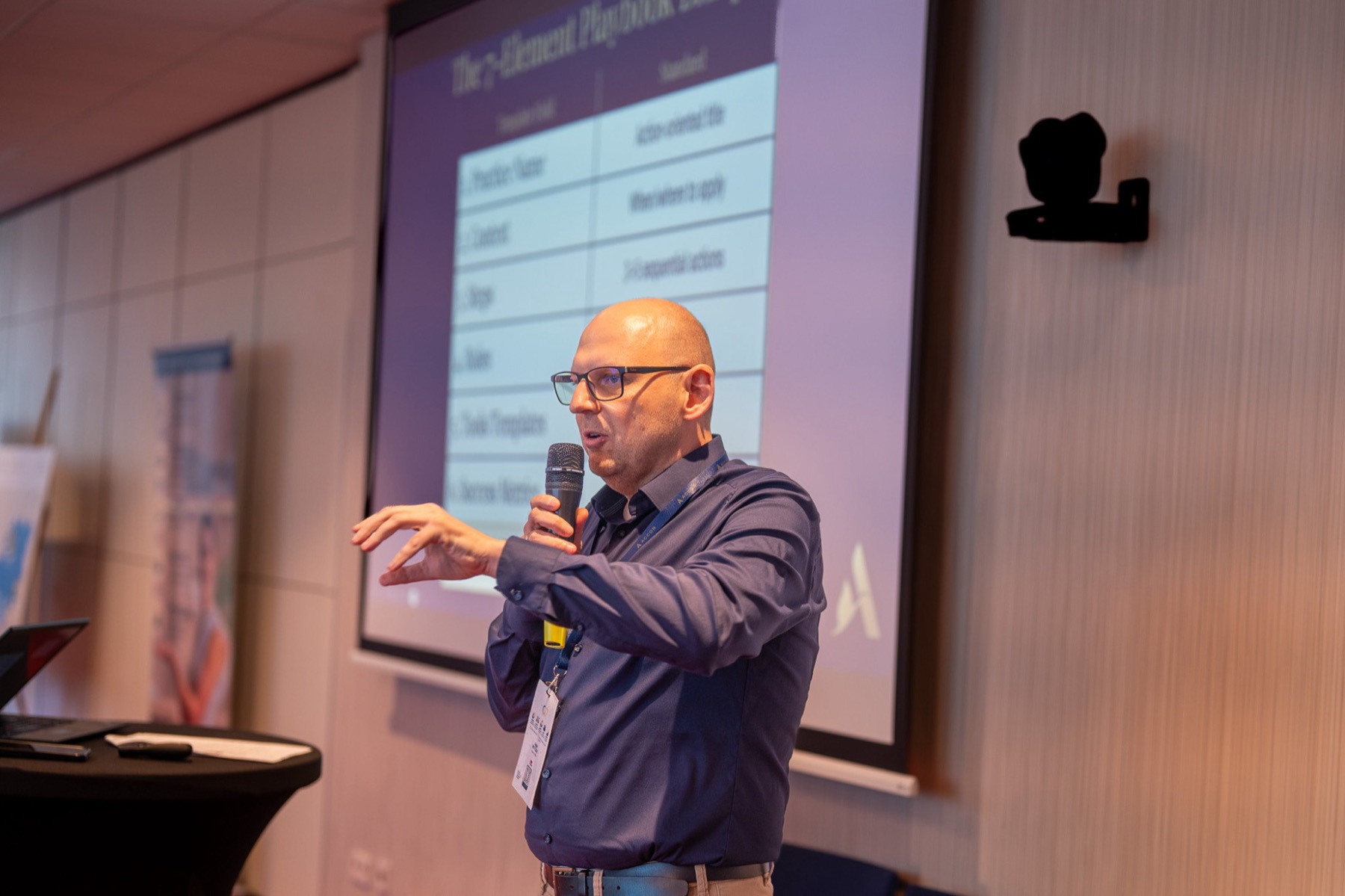
In small groups, participants turned their best practices into Engagement Playbooks. Each one has seven parts: practice name, context, steps, roles, tools, success measures and common pitfalls.

All playbooks were photographed, so other hotels can reuse them.

6

Part 6 of 8

Harvest: the gallery walk

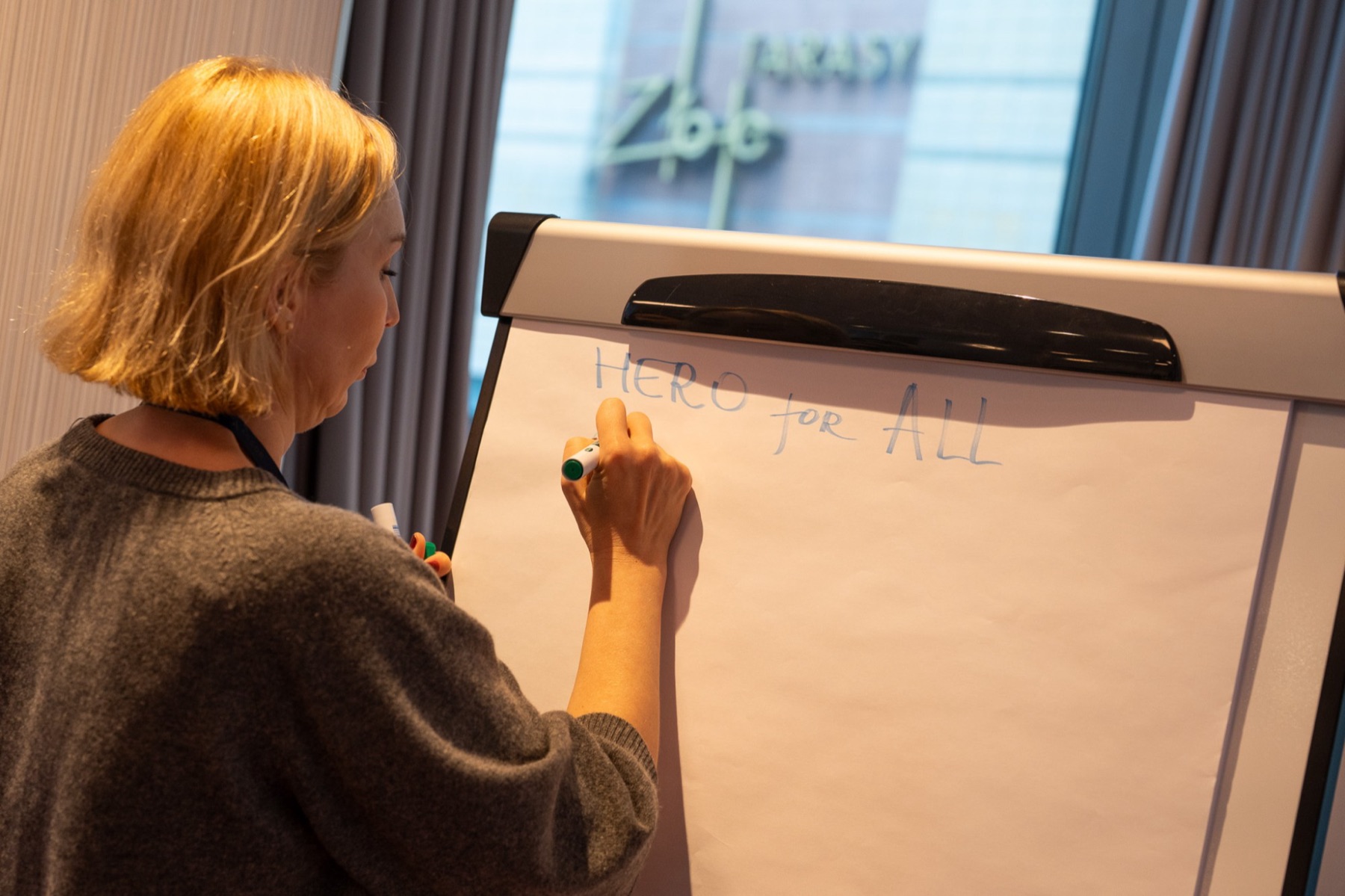
All playbooks went up on the walls. Everyone walked around and put dot stickers on the best ones. Rafał then grouped them into a few themes, as first “How we work best” principles for everyone.

7

Part 7 of 8

The 14-day commitment

Everyone left with three commitments: one practice to try in the next 14 days, one measure to test, and one partner from the room.

The plan after the event: share all playbooks in one place, a short partner check-in after 14 days, and a 30-minute online exchange with the whole group after 21 days.

8

Part 8 of 8

What the room showed

The group was open, active and creative. People from different countries and hotels shared successes and challenges, and felt part of one Heartist community. The shared conclusion: engagement grows every day through trust, recognition, teamwork, autonomy and connection.

05

The whole workshop on one page

Engagement WorldCafé1Strengths firstBuild on what worksNot just fixing gapsLess defensive, more energyDaily behaviour, not projects2The scienceAppreciative inquirySocial learningCommunities of practiceSocial exchange3Round 1: storiesWhen was it easy?Tables of 4–5Host writes patterns“If we did more of …”4Five driversPassionAppreciationFreedom to actManagers’ trustTeamwork5PlaybooksCase clinic: no advice firstSeven parts eachGallery walk and votesShared with all hotels614-day loopOne practiceOne measureOne partnerCheck in at day 14

Engagement World Café

  1. 1Strengths first

    • Build on what works
    • Not just fixing gaps
    • Less defensive, more energy
    • Daily behaviour, not projects
  2. 2The science

    • Appreciative inquiry
    • Social learning
    • Communities of practice
    • Social exchange
  3. 3Round 1: stories

    • When was it easy?
    • Tables of 4–5
    • Host writes patterns
    • “If we did more of …”
  4. 4Five drivers

    • Passion
    • Appreciation
    • Freedom to act
    • Managers’ trust
    • Teamwork
  5. 5Playbooks

    • Case clinic: no advice first
    • Seven parts each
    • Gallery walk and votes
    • Shared with all hotels
  6. 614-day loop

    • One practice
    • One measure
    • One partner
    • Check in at day 14
06

Tools you can use

Appreciative inquiry

Start with what works: “When did engagement feel easy, and what made it possible?”

The case clinic

Context (3 min), then questions only with no advice (5 min), then concrete solutions (7 min).

The 7-part playbook

Name, context, 3–5 steps, roles, tools, 1–2 success measures, pitfalls to avoid.

Gallery walk

Put all ideas on the wall, vote with dot stickers, group the best into themes.

14-day loop

One practice, one measure, one partner. Check in after 14 days.

07

Best quotes

“Engagement is built on strengths, not just fixing gaps.”
Rafał Witczak
“Recall a moment in the last 6–12 months when engagement felt easy and effective. What made it possible?”
Round 1 question
“Help every Heartist feel they belong.”
Rafał Witczak
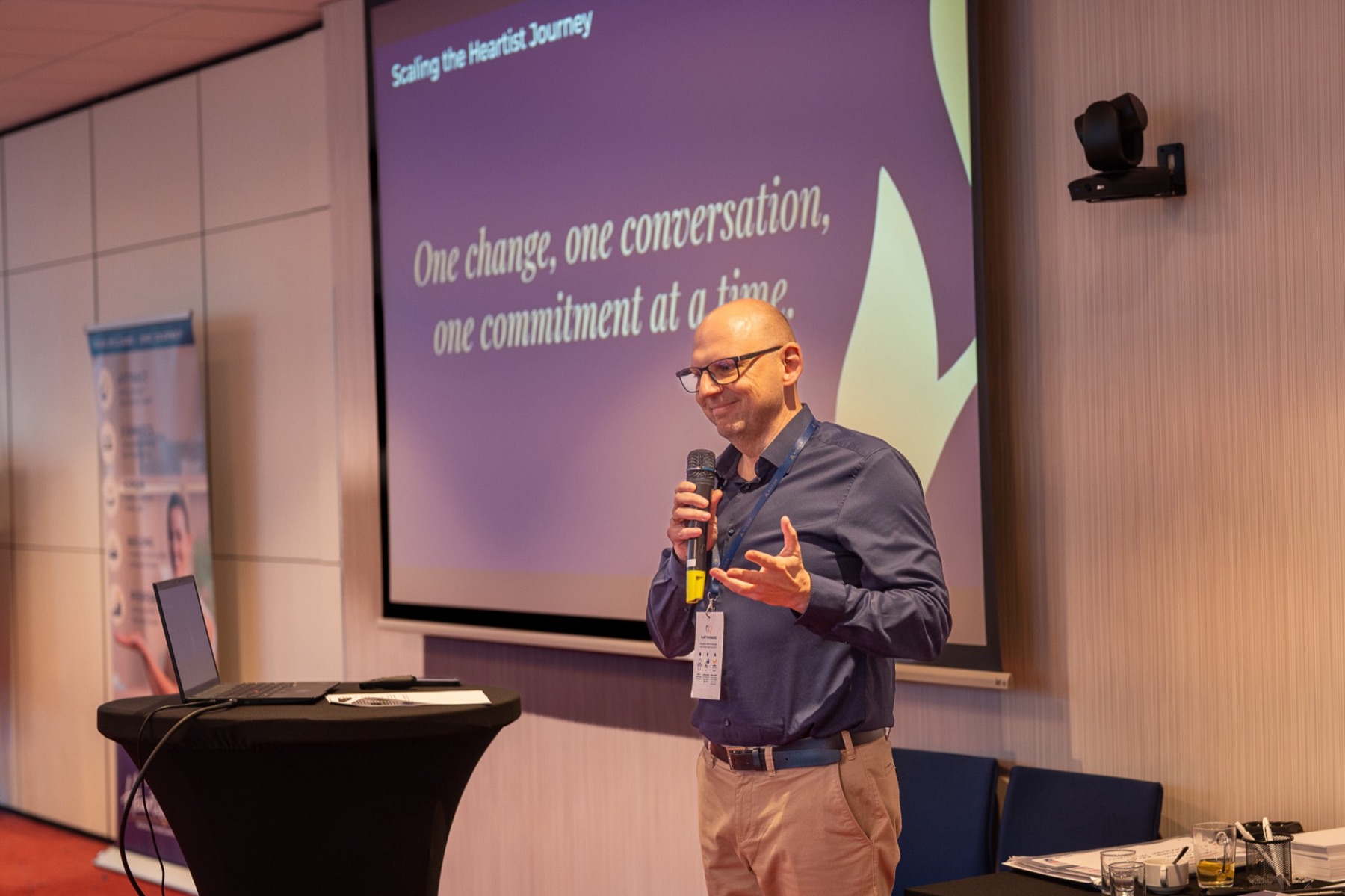
“One change, one conversation, one commitment at a time.”
Rafał Witczak
08

Questions & answers

QWhat would make engagement better in our hotels?

AEvery table finished the sentence “If we did more of …”. The answers: passion for what we do, appreciation of work done, freedom to act, managers’ trust, and teamwork.

QWhat did participants take home?

ATheir own playbooks, one practice to try in the next 14 days, one measure to test, and a partner from the room to check in with.

09

Try this at your hotel

  • Ask your team: “When did engagement feel easy here, and why?”
  • Pick one practice from the playbooks and try it in the next 14 days.
  • Choose one simple measure to see if it works.
  • Find a partner and check in with each other after 14 days.
  • Write one of your own best practices as a 7-part playbook.
  • Show appreciation and trust every day, not only in projects.

We wrote this recap from Rafał’s workshop summary and his slides. Quotes come from the slides.

↑